4 Types of T-Shirt Printing and How to Choose

If you have never ordered custom t-shirts before, you have probably run into the exact same problem everyone faces. You know you want shirts printed, but you just do not know which method to pick. Screen printing, DTG, dye sublimation, and heat transfer all end up giving you a printed t-shirt, but they get there in very different ways. That difference directly affects what you pay, how the print feels against your skin, and how long it lasts in the wash.

Pick the right one and you barely think about it again. Pick the wrong one and you either pay too much for a method that did not suit your order, or end up with a print that wears out faster than it should. Here is a simple look at all four methods, how each one works, when to actually use it, and where it falls short, so you can choose with a bit more confidence.

  1. Screen printing

Screen printing has been around the longest, and it is still popular for a good reason. Instead of printing your design fresh onto every shirt, it uses a physical stencil. Once that stencil is made, printing shirt after shirt becomes fast and cheap. That is also why it does not suit small orders well. You pay for the stencil no matter how many shirts you print, so it only makes financial sense once you are printing a lot of them.

How It Works

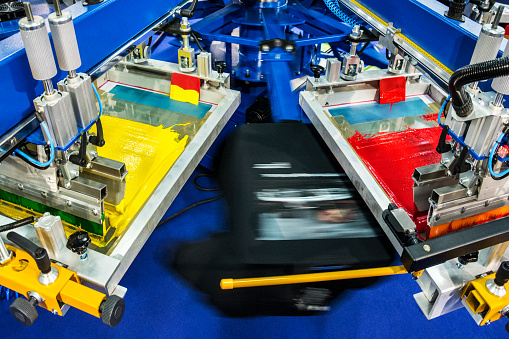
You start with a stencil of your design, stretched across a fine mesh screen, usually made of nylon. The mesh is prepared first, so your design stays open while everything else gets blocked off. Ink is then spread across the screen and pushed through with a squeegee. This forces the ink through the open mesh and onto the shirt underneath. Whatever ink does not go through gets wiped off, ready for the next shirt. Because the same screen is used each time, every shirt comes out looking exactly the same.

When It’s Best to Use

Screen printing works best for bulk orders, generally 50 shirts or more. That is the point where the setup cost gets spread thin enough across the run to stop mattering. It is a great fit for company uniforms, event shirts, team merchandise, or anything with just a few solid colours rather than gradients or photo-like detail. If your design has one to four flat colours and you need a good quantity, this is very likely the method for you.

Pros:

  • Sharp results that hold their colour remarkably well over time
  • Very durable once the ink is properly heat-cured
  • Outstandingly cost-effective once you are printing in quantity
  • Fast for repeat runs, since the setup work only happens once

Cons:

  • The setup cost makes small orders uncomfortably expensive
  • Struggles with detailed or photo-like designs, since every single colour needs its own screen
  • Needs proper commercial equipment, so it is not something you can easily do by hand at home
  • Every extra colour adds more cost and more production time

If you are printing in bulk, our Silk Screen Printing service has pricing and turnaround details based on your quantity and colour count.

  1. Direct to Garment (DTG)

DTG printer printing a full-colour graphic on a black t-shirt

DTG skips the whole idea of a screen. It uses special inkjet technology to print your design straight onto the fabric in full colour. It works just as well on dark shirts as light ones, and there is no need for a new screen every time you add a colour. That is why DTG usually suits the opposite kind of order to screen printing, handling small batches with detailed designs rather than large runs of something simple.

How It Works

Think of a regular desktop printer, except the paper is a t-shirt. The garment goes into the DTG printer, which lays ink down directly onto the fabric, layer by layer, following your design exactly as you built it. There is no stencil and no screen involved. That is exactly why DTG handles detailed, full colour, or photo-based designs so well, without the extra setup cost that same detail would add to a screen printing job.

When It’s Best to Use

DTG is the right choice for small orders, samples, or a one-off custom shirt where screen printing’s setup cost would not be worth paying. It also works well the moment your design has fine detail, a wide range of colours, or something photo-based that would need a stack of separate screens otherwise. If you are testing a design before ordering in bulk, or printing something like a photo or a detailed illustration, DTG is usually your best option.

Pros:

  • Handles detailed, photo-like, or multi-colour designs that would be expensive to screen print
  • Feels soft and comfortable to wear, since the ink soaks into the fabric rather than sitting on top
  • No setup cost, which makes single shirts or small batches genuinely affordable
  • Reproduces complex designs quickly, with no extra plates or screens needed

Cons:

  • Dark fabric needs an extra step (pretreatment) to keep the colours looking bright
  • How long it lasts depends a lot on the fabric and how you care for it afterwards. Wash it cool, use a gentle detergent, and skip the tumble dryer, and a well-made DTG print will usually last 40 to 50 washes or more. This can vary depending on the garment and the ink used
  • Works best on cotton and cotton blends, since the ink needs natural fibres to bond with properly

Not sure if DTG suits your design? Our DTG Printing page has more on what we recommend depending on garment colour and order size.

  1. Dye sublimation

Dye sublimation printer printing a floral pattern on fabric

Dye sublimation works completely differently from the other methods. Instead of sitting on top of the fabric like ink does with screen printing or DTG, the dye actually becomes part of the fabric itself. That is why sublimated prints look so vivid and last so long. There is nothing sitting on the surface that can eventually crack, peel, or fade away over time.

How It Works

A special dye is applied to transfer paper first and left to dry completely. Then heat and pressure are used to turn that dye from a solid into a gas, which bonds directly into the fabric rather than sitting on top of it. Because the fabric itself is being dyed, not printed on, the result looks bold and clear but will not feel raised or textured under your fingers.

When It’s Best to Use

Use dye sublimation when your design is large, detailed, or needs to cover the whole shirt rather than sit in one small area. It is the go-to choice for sports jerseys, active wear, and anything made from polyester that needs to keep its colour through heavy wear and constant washing. One important thing to know early on is that if your fabric is cotton, this is not the method for you. The dye simply will not bond with natural fibres the way it does with polyester.

Pros:

  • Handles large, highly detailed, and all-over designs without losing quality
  • A huge range of achievable colours, vibrant shades, and subtle gradients
  • Genuinely long lasting, since the dye becomes part of the fabric instead of sitting on it

Cons:

  • Only works well on polyester and polyester blends, as it will not bond with cotton at all
  • Not cost-effective for very small orders, since setup steps still apply no matter the quantity
  • Fabric texture and seams, especially around the armpits or sides, can sometimes show through in lighter parts of a design

Thinking about polyester sportswear, uniforms, or an all-over print? Our Dye Sublimation page goes into more detail on what works best.

  1. Heat transfer

Colourful heat transfer prints being applied to a black t-shirt

Heat transfer, which we offer as our Direct to Screen (DTS) service, is the simplest method to set up out of all four. There is no screen to prepare and no printer to load the shirt into directly, which makes it the fastest way to get started if you only need a handful of shirts or something completely custom.

How It Works

Your design is printed onto special heat transfer paper first, using an inkjet or laser printer, so the whole design is created before it ever touches the shirt. That paper is then placed face down against the t-shirt and pressed with heat, which transfers the design onto the fabric. How well it sticks, and how long it lasts, depends on how much heat and pressure are used during that pressing step.

When It’s Best to Use

Heat transfer is the right pick for small orders, rush jobs, and one-off custom designs, anywhere screen printing’s setup cost or DTG’s per-shirt pace just does not make sense. It is also handy when you are printing across a mix of fabric types in the same order, since transfers can go onto more types of material than sublimation or DTG can manage comfortably. Need a handful of shirts quickly, and not sure what fabric they will all be? This is usually your fastest option.

Pros:

  • Lower setup cost than screen printing, dye sublimation, or DTG
  • Well suited to small orders and one-off custom designs
  • Complex or photo-based designs print easily onto the transfer paper before ever touching the shirt
  • Works on a wider range of fabrics than sublimation or DTG
  • Faster turnaround for small quantities than bulk methods like screen printing

Cons:

  • Does not work as well on dark fabrics, since the transfer material tends to show against darker backgrounds
  • Not recommended for heat-sensitive fabrics, since the pressing step relies on direct heat
  • Each transfer is applied one at a time, so it becomes less efficient than screen printing once your order gets bigger
  • Need something quick for a small or custom order? Our Direct To Screen (DTS) service page has the full details.

Which Method Is Right for You?

With four methods to choose from, it usually comes down to answering three simple questions. How many shirts do you need? How detailed is your design? And what fabric are you using? Start with quantity. If you are ordering in bulk, generally 50 shirts or more, screen printing will almost always win on cost, as long as your design uses just a few flat colours. If you are ordering a handful, or even just one shirt, screen printing’s setup cost stops making sense. That is when DTG or heat transfer become the smarter choice.

Next, think about how detailed your design is. A simple logo or wordmark in one to four colours suits screen printing well. Something detailed, photo-based, or full of gradients is a much better fit for DTG, since it can reproduce all of that without needing a separate screen for every colour. If that same detailed design also needs to cover the whole shirt rather than sit in one area, dye sublimation is worth considering instead, as long as your fabric allows for it.

Finally, there is fabric. Dye sublimation only works on polyester and polyester blends, so if you want cotton, that option is out no matter how well it would otherwise suit your design. Screen printing, DTG, and heat transfer are all more flexible with fabric, though DTG works best on cotton and cotton blends, and heat transfer tends to be the most forgiving choice if you are mixing fabric types within the same order.

To sum it up simply, bulk orders with simple designs suit screen printing. Small batches or detailed designs suit DTG. Large or all-over designs on polyester suit dye sublimation. And small, urgent, or one-off orders suit heat transfer. None of this is set in stone though. Plenty of orders sit somewhere between two methods, and that is exactly the kind of thing our team can help you work through.

Still not sure which method fits your project? Get in touch with our team and we will help you find the right fit for your design, quantity, fabric, and budget before you commit to anything.

more insights

Need More Details?

Have questions or need more information? Fill out the form below, and our team will get back to you shortly. We’re here to help you find the perfect fit for your needs.