Order enough polos and jackets for a team, and you’ll eventually run into the same decision. Print the logo, or stitch it. It sounds like a small choice, but it ends up written all over how your team looks for years afterward, every time someone wears it to a meeting, a trade show, or just an ordinary Tuesday at the office. Embroidery has stayed the default answer for a lot of businesses, and once you know how it actually works, it’s easy to see why.
That said, it isn’t the right fit for every design or every budget. Below, we’ll walk through what makes embroidery hold up so well, what it actually costs once you factor in the whole process, and the situations where printing is genuinely the smarter pick instead.
What Is Embroidery?

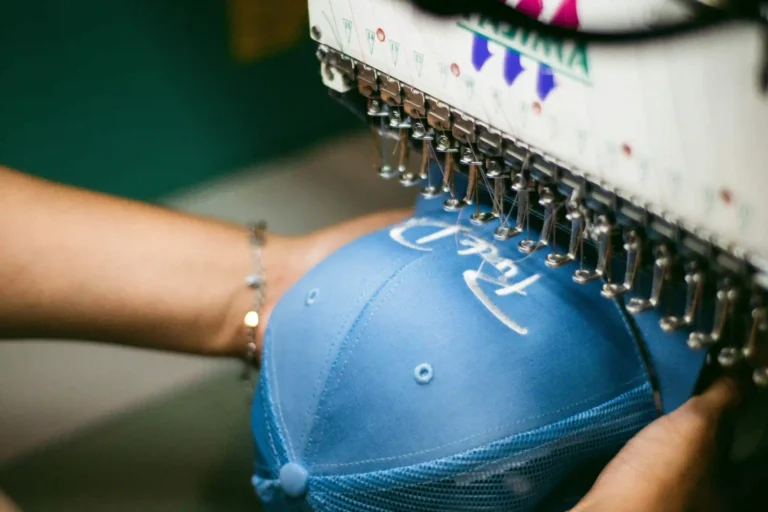
Embroidery is a decorative technique that stitches a design directly into fabric using thread and a needle. It’s been around for centuries, and while it can still be done entirely by hand, almost all corporate work today goes through a computerised embroidery machine instead. Before any stitching happens, your logo or design first needs to be digitised, converted into a stitch file the machine can actually read. That digitising step is usually a one-time fee per design, and once it’s done, the same file can be reused for every future order.
A few things make embroidery feel different from a printed design the moment you touch it. The stitching sits slightly raised off the fabric, giving it a texture you can pick out just by running a hand over it. Thread comes in a set range of standard colours rather than an unlimited palette, so embroidery tends to suit bold, clearly defined shapes better than subtle colour blending. It also adds a small amount of weight and stiffness to the fabric right where the stitching sits, and it holds up best on sturdier materials like cotton twill, polo knits, and canvas, rather than very thin or delicate fabrics.
Why Businesses Choose Embroidery
It Looks Genuinely Professional
An embroidered logo has a texture and depth that flat printing can’t quite match. Raised stitching catches the light differently depending on the angle, and that’s usually what makes it read as higher quality the moment someone looks closely. On polos, jackets, and caps in particular, it’s often the detail that makes an outfit look deliberately put together rather than just branded.
It Holds Up Over Time
Because the design is stitched into the fabric rather than sitting on top of it, embroidery holds its shape and colour through years of regular washing far better than most printed alternatives. It handles frequent washing well, which matters a lot for uniforms and workwear that get worn several times a week. A well-stitched design can easily outlast the garment itself.
It Works Across a Wide Range of Apparel
Embroidery isn’t limited to shirts. It works well on polos, jackets, caps, bags, and even leather goods, which makes it a practical choice if you’re outfitting a team with more than one type of apparel and want the branding to stay consistent across all of it.
The Real Cost Picture
Embroidery often looks more expensive upfront than printing, mainly because of that one-time digitising fee. But once your design is digitised, the cost per piece tends to drop as your order grows, and because embroidered apparel lasts longer, businesses often replace it less often than printed alternatives. Larger orders typically also come with better per-unit pricing, so the bigger your team, the more the maths tends to work in embroidery’s favour.
Where Embroidery Isn’t the Best Fit
Embroidery has real limits worth knowing about before you commit to a design. Fine detail, small text, and gradients don’t translate well into stitching, since thread simply can’t capture the same level of precision as ink. Photographic or highly detailed designs almost always look better printed than embroidered. If your logo has intricate linework or you’re working with very small apparel like caps where space is limited, it’s worth checking with us whether the design will actually hold up in stitched form before you order in bulk. If you’re weighing embroidery against printing for your specific design, our Embroidery vs Printing comparison breaks down exactly when each one makes more sense.
Weighing all of that against your own design is really the only way to know for sure. A logo with clean lines and a handful of colours will usually embroider beautifully. Something with fine detail or a full colour gradient might be better off printed instead, and that’s a completely normal thing to run into partway through planning a rollout for your team.
If embroidery sounds right for what you have in mind, take a look at our Embroidery Services page, or get in touch and we’ll help you figure out the right fit.